Español
 English


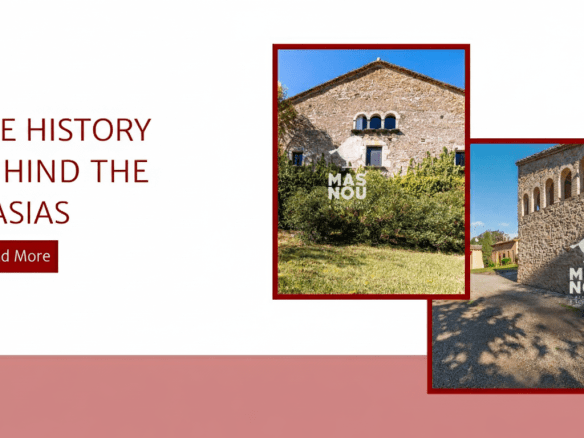
Have you ever wondered what secrets lie behind those imposing rural constructions scattered across the Catalan landscape? Masias, far more than simple buildings, are silent witnesses of our history, traditions, and social evolution over the centuries. At Residencial Mas Nou, experts in the real estate market of Platja d'Aro and its surroundings, we invite you on a fascinating journey through time to uncover the true value of these architectural gems that today represent one of the most exclusive options in the rural property market.
The Historical Origins of Catalan Masias
The roots of these emblematic constructions go much further back than one might imagine. The term masia comes from the Latin mansus, which referred to a family-run agricultural estate. However, the concept we know today began to take shape during the medieval period, specifically between the 12th and 13th centuries, coinciding with the Reconquista and the repopulation of Catalan territory.
"Masias are not simply rural houses; they represent a complete economic, social, and family system that has defined the territorial structure of Catalonia for centuries," explain the historical property experts at Residencial Mas Nou.

Architectural Evolution Through the Centuries
The structure of masías has evolved over time to adapt to the needs of each era:
- 12th–14th centuries: Simple one-story constructions with stone walls, primarily intended for family subsistence.
- 15th–16th centuries:Emergence of two-story masías. The ground floor was used for livestock and storage, while the upper floor served as the family residence.
- 17th–18th centuries:·The golden age of the masías. Larger, more stately buildings were constructed, typically with three clearly defined levels:
- Ground floor: workspaces and production areas
- First floor: the family residence (the so-called “noble floor”)
- Second floor: storage for grain and harvests
- 19th–20th centuries: Adaptation to new production models and the introduction of modern comforts, while preserving their architectural essence.
Did you know that, according to the Department of Culture of the Generalitat of Catalonia , there are currently more than 7,800 catalogued masías across the Catalan territory? Of these, approximately 32% still maintain some type of agricultural or livestock activity, while a growing 41% have been restored for residential or tourism purposes.
The Masía as the Nerve Center of Catalan Rural Life
Masías represented far more than a simple dwelling. They were true self-sufficient microcosms where all family and productive life unfolded. The owning family, traditionally referred to as the pubilla (heiress) or the hereu (heir), upheld a system of succession that ensured the preservation of the family estate intact, generation after generation.

Distinctive Architectural Elements
What makes a masía truly a masía? These are the architectural features that define its authenticity:
- The main façade: Typically oriented to the south to maximize sunlight, with a symmetrical composition and the entrance door as the central element.
- The “sala”: The central space on the first floor, it was the social heart of the masía, where family gatherings and celebrations were held.
- The kitchen with “llar de foc”: The open-hearth fire was not only used for cooking but also served as the family gathering point during the long winter nights.
- Catalan vaults: This characteristic construction system allowed for large, resilient spaces without the need for major supports.
- Defensive elements: Many masías incorporated watchtowers or defensive structures, reminders of more turbulent times.
“Each masía tells a unique story. In its walls, beams, and stones, we can read the passage of time and the adaptations made by each generation to keep it alive,” explains Maria Puig, an architect specialized in the restoration of traditional buildings.
Masías in Today’s Real Estate Market: A Growing Asset
In recent years, interest in acquiring and restoring masías for sale has experienced remarkable growth. According to data from the Rural Real Estate Market Observatory of Catalonia, the average price of a restored masía has increased by 23% in the last five years—well above the average growth of the traditional housing market.
This trend intensified especially after the COVID-19 pandemic, when searches for rural properties with history, such as masías, rose by 47%. The combination of space, nature, and historical heritage has become a unique value in the market.
Why Invest in a Masía?
- Growing heritage value: Well-preserved or restored historical buildings maintain and increase their value over time.
- Versatility of uses: From primary or secondary residences to rural tourism projects or event venues.
- Connection with nature and history: Living in a masía means inhabiting a space with centuries of history in privileged natural settings.
- Customization potential: Restorations allow for the blending of historic elements with contemporary comforts.
“At Residencial Mas Nou, we’ve observed that buyers of masías are looking for more than a property; they are seeking a different life experience, a personal project that connects them with values such as authenticity, history, and sustainability.” — Team at Residencial Mas Nou
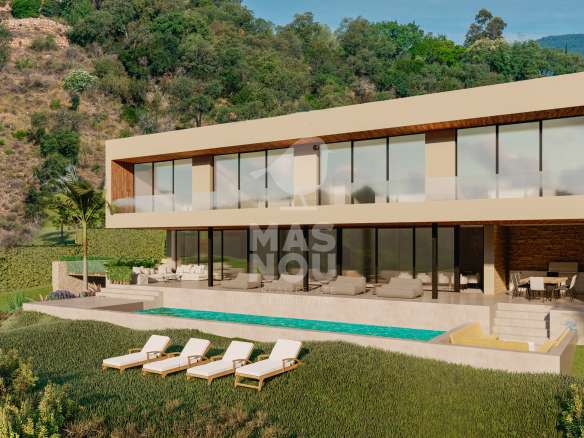
[caption id="attachment_36019" align="alignnone" width="1170"] Masia for sale in Platja d'Aro[/caption]
Preserving the Essence of a Masía in the 21st Century
Restoring a masía presents a fascinating challenge: how to preserve its historical authenticity while incorporating modern comforts? This tension between tradition and innovation is precisely what makes each project unique.
The Story of Mas Les Gavarres in Platja d’Aro:
Mas Les Gavarres, a 17th-century masía located at the summit of the Mas Nou development in Platja d’Aro, perfectly embodies this symbiosis between past and present. When the owners decided to undertake a major renovation of this imposing structure, they understood that they were not simply renovating a house, but recovering a piece of local history.
The rehabilitation process, which lasted several months, focused on three core principles:
- Respect for original elements: Wooden beams, terracotta floors, and exposed stone walls were preserved and restored.
- Discreet integration of technology: Efficient climate control systems, LED lighting, and connectivity were incorporated, all without altering the traditional aesthetic.
- Sustainability: Double-glazed windows and various energy-efficient solutions were installed, granting the property an A energy rating.
Today, Mas Les Gavarres is not only a comfortable family residence with 12 hectares of land, but also an inspiring example of how masías can adapt to contemporary needs without losing their historic soul.
Masías: A Living Legacy with a Future
Catalan masías are much more than simple rural constructions; they represent an invaluable architectural, cultural, and historical heritage. Their evolution over the centuries reflects both adaptability and resilience, proving that far from being relics of the past, they continue to find new uses and meanings today.
Whether as a primary residence for those seeking a deeper connection with nature and history, a second home for escaping urban life, or a sustainable rural tourism project, masías offer possibilities as diverse as the people who inhabit them.
At Residencial Mas Nou, we understand the responsibility involved in working with these unique properties. We do more than market real estate; we help transmit a historical legacy to future generations. Would you like to be part of this story? Contact our specialized team and discover the timeless charm of Catalan masías.
Are you considering purchasing a country house but have questions about the process? Would you like to learn more about the possibilities offered by these historic buildings? At Residencial Mas Nou, we can help you find the property that suits your needs and advise you throughout the entire process.